Integrated System Tackles Student Transportation Logistics
- By Dian Schaffhauser
- 10/05/20
Two
software companies, one in education logistics and the other in
industrial internet-of-things, have co-developed a system to help
school districts sort out student transportation. Edulog
develops software for school bus routing. Samsara
uses IoT-generated data in a number of business sectors, including
K-12, to optimize operations. Their new joint solution specifically
addresses student safety, route planning and parent communication.
The
integration enables Edulog customers to:
-
Design
student transportation routes that support various bell schedules
and physical distancing guidelines, perform contact tracing and
provide information about student ridership;
-
Proactively
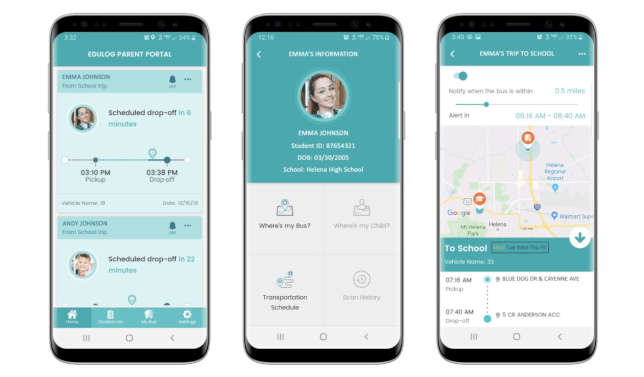
share estimated time of arrival, route updates and other alerts
through a parent
portal app;
and
-
Plan
more efficient routes with modeling tools that use data collected
about ridership, fleet use and route performance.
For
the system to work, schools capture data on when and where students
board and disembark from their buses using Samsara
ID Card Readers
and GPS
tracking.
With that information transportation staff can figure out which route
students are on, locate the bus and confirm who else is on the bus.
One
district customer, Roger Miller, transportation manager at East
Allen County Schools,
said he has seen improvements in the quality of his operations since
adopting the integrated system. "This school year, agility and
accountability were especially important as we prepared to reopen in
the face of COVID-19. By working with Edulog and Samsara, we were
able to optimize our route plans and move from hard-wired telematics
devices to a driver-friendly, tablet-based solution," said
Miller, in
a Samsara article.
"This solution helps us transport students safely and
efficiently."
Miller
added that drivers were trained on the use of tablets in a couple of
hours. Now, when somebody calls in sick, the new system generates
"faster re-routes" and "better performance for
students and parents."
"For
school districts, having accurate, real-time data is critical for
responding to parents more confidently, improving the quality of
their transportation and keeping students safe. But just as important
is having a route management system that is the foundation for this
data--you have to plan, analyze, and manage what is best for students
and the community," said Jason Corbally, Edulog president. "The
Edulog and Samsara integration will give schools, students, and
parents the data and planning tools needed for a safe and efficient
return to school this year."
About the Author
Dian Schaffhauser is a former senior contributing editor for 1105 Media's education publications THE Journal, Campus Technology and Spaces4Learning.