Classroom AI Tool Built Around Education-Specific Large Language Model
AI company Merlyn Mind has launched an education-specific tool designed for the classroom and built around a large language model created using vetted educational resources, as opposed to AI tools built on broader internet content.
The tool, Merlyn Origin, gives teachers the ability to "use their voice from anywhere in the classroom to control their learning applications, computer, and front-of-class display. With Origin, teachers can access classroom lessons, generate quick quizzes, and help students find answers on the spot – all with the confidence that they're pulling content from an LLM specifically trained on vetted, educational content and resources, not from the entirety of the internet."
Merlyn Mind said Origin is the first large language model, or LLM, created specifically for classroom use. The company said other educational tools powered by generative AI rely on broad-based LLMs like ChatGPT.
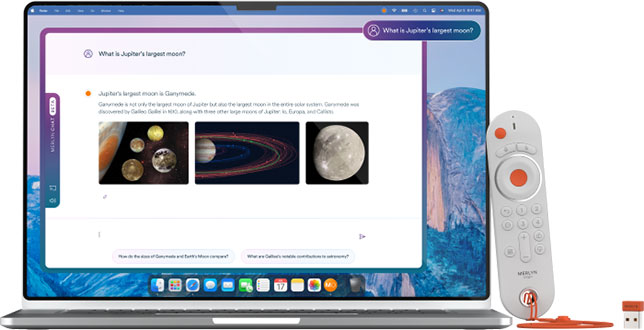
In addition to being built around vetted educational content, it's also designed to block "inappropriate use" and protect user data through redaction. It's also designed to prevent "hallucinations," the phenomenon in which generative AI's will make up "facts," cite non-existent sources, or otherwise generate non-factual information. The company did not indicate how its AI achieves this.
"Educators must be able to confidently employ AI tools tailored for classroom use, emphasizing their educational and developmental suitability," said Dr. Satya Nitta, Co-founder and CEO at Merlyn Mind. "Driven by our belief that people collaborating with purpose-built AI can unlock previously unattainable human progress, Origin has been designed as a secure, locally-focused, and education-centric solution aimed at enhancing learning outcomes and advancing our objective of incorporating the latest AI advancements into education."
The company said that in the future, educators will also be able to " integrate their own content and curriculum into the platform as part of a walled-garden approach that allows both teachers and students to harness the capabilities of generative AI safely to encourage curiosity and promote higher-order thinking during class, which, in turn, enhances the learning experience."
Further details are available at merlyn.org.