K-12 Technology News
Here you'll find the latest news from the education technology world, from the newest hardware and software releases to policy and funding updates to research reports to school and district tech initiatives. Looking for more in-depth coverage of important topics? Be sure to visit our Features page.

AI agents are moving from experiments into everyday enterprise environments, but the security controls around them are not keeping pace, according to enterprise identity security company SailPoint.
Cybersecurity company Flashpoint announced it has received U.S. Patent No. 12,705,360 for its Ransomware Risk model, a methodology designed to help security teams determine which newly disclosed vulnerabilities more closely resemble those historically used in ransomware attacks.

Recent research from Thales highlights how AI adoption and emerging quantum computing threats are putting pressure on existing security measures.

Anthropic's new Claude release, Sonnet 5.5, brings cybersecurity safeguards that can change which model handles a request during a Claude conversation. Higher-risk tasks can fall back to Sonnet 5.

According to a new survey from identity security company Delinea, 99.7% of IT and security leaders said their organization has a formal policy governing what data AI tools and agents are permitted to access. Yet only about 51% said AI access is checked against those policies in real time.

OpenAI has introduced Dots, GPT-6 Astra-powered agents that run on their own cloud computers, using connected applications to carry on with assignments between conversations and incorporating users' feedback as they go.

Enterprise AI projects are running into infrastructure questions as organizations move from planning toward deployment, according to recent research from Digital Realty.

Network-provider trust concerns are impacting enterprise AI plans, with AI and data-driven projects the most affected initiatives among respondents reporting disruption, according to a report from telecommunications provider Arelion.

OpenAI has announced it will retire Custom GPTs and move the specialized workflows built around them to a new plugin architecture spanning ChatGPT and its Codex coding agent.
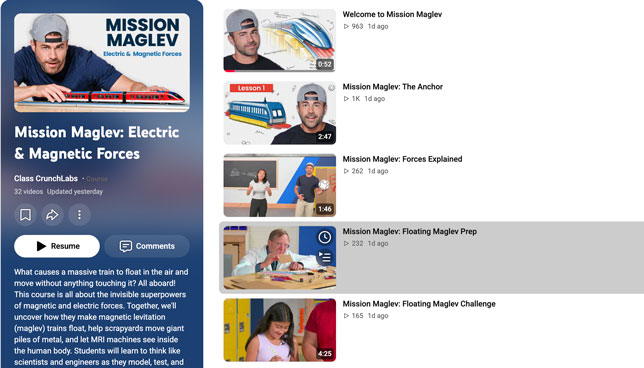
Class CrunchLabs, the suite of free curriculum resources from NASA engineer turned YouTube science communicator Mark Rober, has released its first two courses on YouTube.