Legends of Learning to Add PhET Interactive Science Simulations
- By Dian Schaffhauser
- 10/03/17
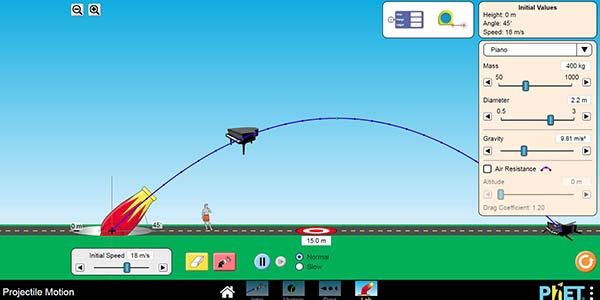
PhET, a non-profit project within the University of Colorado, Boulder, is teaming up with Legends of Learning, a middle school science gaming company, to put its science and math-based interactive simulations on the gaming platform. To begin, 30 interactive simulations will find their way into the Legends of Learning library with the expectation that more will be added later. According to the two organizations, the simulations will be available starting later this month.
The addition will give middle school science teachers who use Legends a boost in the number of supplemental activities available for their students to play. However, the gaming platform already offers nearly 800 games in three major subjects: earth and space sciences, life sciences and physical sciences.
PhET's simulations go beyond middle school. The project also makes programs available for elementary and high school and college-level courses.

"The partnership with Legends of Learning is a wonderful opportunity to bring our simulations to more teachers and students," said Kathy Perkins, director of PhET, in a prepared statement. "We are excited to provide teachers with an easy way to share both educational games and simulations in one place."
PhET was founded by Nobel Laureate Carl Wieman in 2002 to advance scientific literacy. Today, according to the project, the simulations are used 80 million times a year by students and teachers. They're intended to help the students build real-world connections, albeit with a sense of humor. For instance, activities allow users to explore forces, energy and motion by engaging in tug-of-war, designing their own skateboarding track or shooting pianos out of cannons. Recently, the project received one of six WISE awards, issued by the World Innovation Summit for Education, to recognize "innovative education initiatives around the world."
Legends of Learning was launched by Vadim Polikov after leading a research study that found that students boosted their test scores in as little as three weeks when their teachers used digital games in the classroom. The research, published earlier this year by the Journal of the Learning Sciences, showed the benefits of game-based learning for students when compared to students who had no access to the games.
About the Author
Dian Schaffhauser is a former senior contributing editor for 1105 Media's education publications THE Journal, Campus Technology and Spaces4Learning.