Dream Flight Adventures Building Simulators in Pittsburgh Schools
- By Dian Schaffhauser
- 01/13/14
Two Pittsburgh schools will be adding simulation classrooms this year to provide students with creative ways to develop skills in teamwork, critical thinking, and problem solving while also studying several subjects, including science, technology, engineering, social studies, humanities and the arts. A new elementary school, set to open in June 2014 in the Penn Hills School District, and Harrison Middle School in the Baldwin-Whitehall School District are following the lead of Shaler Area Elementary in working with education technology company Dream Flight Adventures to set up the simulated worlds.
The simulators mix digital and real-world activities to create immersive, interactive learning environments. They support groups of four to 16 "players" at a time; each person maintains a different role on the team — captain, first officer, physicist, communications, security guard, hacker, and so on.
| |
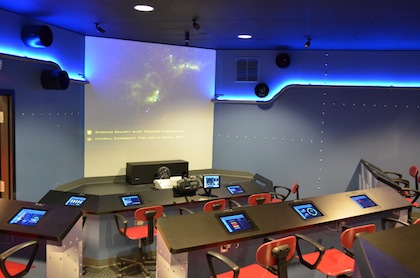
Dream Flight Adventures uses tolls such as iPads, computers and lights to create simulation rooms for schools. |
|
The basic concept, according to company Director Gary Gardiner, is to "throw students into the middle of epic stories and create lasting memories." The learners enter a themed simulator and work together as a team to operate their technology controls and apply their knowledge in pursuit of cross-disciplinary missions.
According to the company site, the simulators are built with "everyday stuff like iPads, computers, lights and wood."
"We are committed to developing a comprehensive K-12 STEM initiative,” said Darlene DeFilippo, director of programs at the Baldwin-Whitehall district. "Dream Flight Adventures will engage students mentally, physically and emotionally in immersive learning experiences that will build student motivation, excitement and participation while aligning STEM connections to a variety of subject areas."
The Carnegie Museum of Natural History, located in the same city, will be adding its own Dream Flight simulator this year as well and expects to collaborate with the two schools.
About the Author
Dian Schaffhauser is a former senior contributing editor for 1105 Media's education publications THE Journal, Campus Technology and Spaces4Learning.