D-Tech International Wins Platinum and Gold at Modern Library Awards
D-Tech International, a designer and manufacturer of Radio Frequency Identification (RFID) products and library security systems, has won the 2017 Modern Library Platinum Award for its ComputeIT laptop lending kiosk system and the 2017 Modern Library Gold Award for its innovative RFID solutions.
D-Tech received both awards in LibraryWorks’ third annual Modern Library Awards (MLAs), held during the American Library Association’s Midwinter Meeting & Exhibits, Jan. 20-24 in Atlanta.
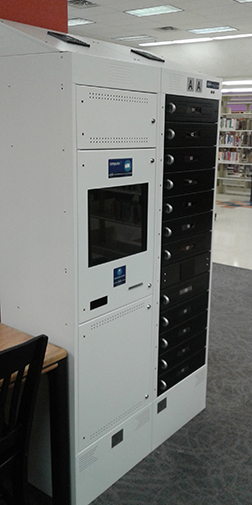
ComputeIT is a multi-bay, modular kiosk locker system designed to safely store, charge and dispense laptops, iPads and MacBooks. Users gain access to the computer assets through an easy-to-use checkout touch screen interface. With its steel chassis and doors and temperature-controlled environment, computeIT is a secure, centralized system for dispensing and managing computer assets.
Here are some key features of ComputeIT:
- Can contain 12 to 96 lockers;
- Barcode, MiFare, biometrics of RFID for patron ID;
- Can connect to ILS via SIP2; and
- Fully CE, UL certified self-charging and equipment monitoring.
As for RFID, D-Tech was one of the first to introduce such products and systems into libraries, according to a news release issued by the company. RFID is no longer just about self-service, it’s about cost savings, the release said. D-Tech’s objective is to deliver innovative and cost-effective RFID solutions to help its library customers within a challenging economic environment.
Also at the ALA’s midwinter meetings in January, D-Tech introduced appIT, a library app developed exclusively for patrons to use on mobile devices. Users can check out items, check account status, make payments, renew items, and chat with a librarian using the app, which is still in testing mode in Texas and Massachusetts.
Some other aspects of D-Tech’s RFID solutions include:
- State-of-the-art digitally enhanced receiver-to-chip technology;
- RFID-perimeter systems that provide maximum detection with false alarm-free protection;
- RFID-equipped self-service checkout units;
- 13.56 MHz, ISO-18000-3 and ISO 15693-compliant labels; and
- RFID wand for searching for missing items and simultaneous inventory taking.
Jenny Newman, publisher and MLA program manager, said in a statement, “It’s hardly a surprise that D-Tech scored so well. They’ve been at the forefront of the industry since the company entered the market.”
More than 50 other awards were given during the MLA program. You can see a full list in the program here.
To learn more about D-Tech International, visit the company’s website. To learn more about the Modern Library Awards program, visit this site.
About the Author
Richard Chang is associate editor of THE Journal. He can be reached at [email protected].