Report: To Unlock Potential of Ed Tech, Use a 'Closed-Loop' Instructional Approach
A new report from the World Economic Forum and Boston Consulting Group finds skills gaps in language arts, math science, critical thinking, problem solving, creativity and curiosity among a range of countries and income levels and suggests that technology could help address the issue.
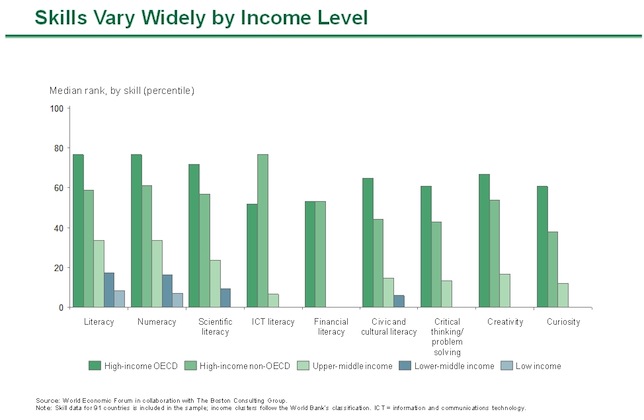
The study, "New Vision for Education: Unlocking the Potential of Technology," examined nearly 100 countries "to understand how education technology can help address critical skills gaps as one tool in a portfolio of approaches," according to a news release. "On the basis of the research results and interviews with dozens of experts, the report discusses a number of representative resources and tools, including personalized and adaptive content and curricula, open educational resources and digital professional-development resources for teachers."
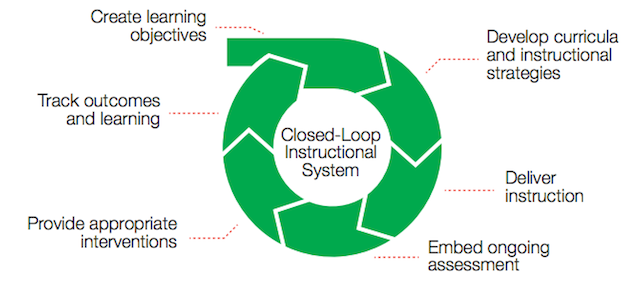
The report argues "that for technology to reach its greatest potential it needs to be better integrated into an instructional system we call the 'closed loop.'" The closed loop system suggested in the report includes creating learning objectives, developing curricula and instructional strategies, delivering instruction, embedding ongoing assessment, providing appropriate interventions, tracking outcomes and learning, then feeding the results back into creating new learning objectives.
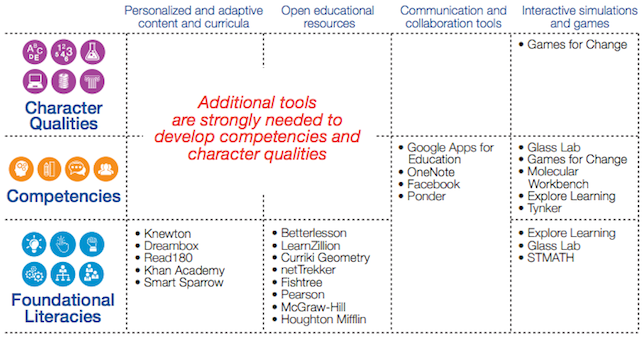
Technologies useful in building a closed loop approach, according to the report, include:
- Personalized and adaptive content and curricula;
- Open educational resources;
- Communication and collaboration tools;
- Interactive simulations and games;
- Digital professional development resources for teachers; and
- Student information and learning management systems.
Most of those technologies are focused on developing foundational literacies, rather than competencies or character qualities, according to the report's authors, who call for more development in the latter two areas.
"Technology is a positive disruptive force for improving the efficiency and quality of education," said Mengyu Annie Luo, head of media, entertainment and information industries at the World Economic Forum, in a prepared statement. "However, for technology to reach its greatest potential in teaching and learning, it needs to be better integrated throughout the instruction process and focus on problems unique to each country's educational context."
The full report is available at weforum.org.
About the Author
Joshua Bolkan is contributing editor for Campus Technology, THE Journal and STEAM Universe. He can be reached at [email protected].