Colorado School District Recovers from Failed VDI Implementation
School District 27J in Brighton, CO, has resurrected its virtual desktop infrastructure (VDI) implementation that crashed on day one under the load of simultaneous logons.
The district's VDI implementation was designed to provide teachers with 24/7 access to district resources. After a year of planning, it launched a 100-desktop pilot program with plans to scale to 800 in a three-phase rollout. But when the system went live on the first day of school, the backend of the infrastructure crashed when the teachers tried to log on to the system.
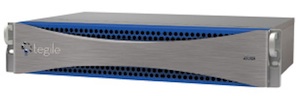
Zebi hybrid storage array |
The district soon determined that its storage area network (SAN) was undersized and unable to perform as expected. District personnel considered adding a tray of solid state drives to its storage array but wanted a solution sooner than the 30 days its vendor was going to require to deliver the solution. After considering products from other vendors, the district opted for two Zebi hybrid storage arrays from Tegile.
“Tegile came out and looked at what we had, assessed our needs in the timeframe we had, and implemented a solution in the middle of an outage," said Jeremy Heide, CIO of School District 27J, in a prepared statement. "They worked with the VMware engineer that was helping us to design a storage system that would address our unique challenges and were able to deliver the Zebi solution within a week of us placing the order.”
The Zebi hybrid storage arrays combine Tegile's MASS technology with high performance DRAM, solid state flash, Intel Xeon processors, and high-speed Ethernet or fiber channel. According to the company, the solution maximizes capacity and performance, and its built-in on-the-fly data de-duplication and compression enables the district to implement more hosted virtual desktops for a lower investment in storage and network infrastructure.
The district has now completed the successful rollout of 866 virtual desktops, which are supported by the two Zebi units. According to the company, desktop delivery times that were initially measured in hours on the previous system now only take 14 seconds with Tegile, and solution's data de-duplication and compression enabled the district to reduce its 25 TB of storage by 90 percent to only 2.5 TB using the Zebi array.
Based on the success of the system, the district is now accelerating its three-year plan to extend its VDI implementation to libraries and students.
Further information about Zebi hybrid storage arrays can be found on Tegile's site.
About the Author
Leila Meyer is a technology writer based in British Columbia. She can be reached at [email protected].