BenQ M7-Series Projectors Target Large Venues with High Light Output
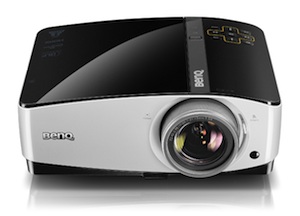
The BenQ MW767 offers a brightness of 4,000 lumens and a resolution of 1,280 x 800. |
BenQ has started shipping five new projectors designed for large classrooms and lecture halls. The new M7 series includes XGA and WXGA models offering brightness ratings of 3,500 lumens or greater.
The new lineup includes three XGA-resolution projectors (1,024 x 768 pixels): the MX720, MX722, and MX766. The MX720 offers a brightness of 3,500 lumens and a contrast ratio of 13,000:1. Other features include:
- 1.64-1.97 throw ratio;
- 1.2x zoom;
- 6,000-hour lamp life in economy mode;
- ±40 degree vertical keystone correction;
- 110 percent projection offset ±5 percent;
- Single 10 watt speaker.
MX722 offers a brightness of 4,000 lumens and a contrast ratio of 13,000:1. Other features include:
- 1.51-1.97 throw ratio;
- 1.3x zoom;
- 3,000-hour maximum lamp life;
- ±40 degree vertical keystone correction;
- 115 percent projection offset ±5 percent;
- Dual 10 watt speakers.
MX766 offers a brightness of 4,000 lumens and a contrast ratio of 5,300:1. Other features include:
- 1.83-2.81 throw ratio;
- 1.5x zoom;
- 3,500-hour maximum lamp life;
- ±40 degree vertical keystone correction;
- 130 percent projection offset ±5 percent;
- Single 20 watt speaker.
The new line also includes two WXGA-resolution projectors (1,280 x 800): the MW721 and MW767. The MW721 has a brightness of 3,500 lumens and a contrast ratio of 13,000:1. Other features include:
- 1.21~1.57 throw ratio;
- 1.3x zoom;
- 6,000-hour lamp life in economy mode;
- ±40 degree vertical keystone correction;
- 120 percent projection offset ±5 percent;
- Single 10 watt speaker.
The MW767 has a brightness of 4,000 lumens and a contrast ratio of 13,000:1. Other features include:
- 1.45-2.17 throw ratio;
- 1.5x zoom;
- 3,500-hour maximum lamp life;
- ±40 degree vertical keystone correction;
- 125 percent projection offset ±5 percent;
- Single 20 watt speaker.
AV inputs common to all five projectors include HDMI, dual RGB (mini D-sub 15-pin), S-video, composite video, stereo RCA, dual stereo minijacks, and microphone jack. Outputs include RGB and stereo minijack. Networking and control ports include LAN (RJ-45), USB type B, RS-232, and dual IR. The MX766 and MW767 also include dual USB type A ports, and their USB type B port is capable of display.
All five models are available now. The MX720 sells for $1,299; the MW721 goes for $1,499; the MX722 retails for $1,499; the MX766 is priced at $2,199; and the MW767 carries an MSRP of $2,399. Further details can be found on BenQ's projector portal.